Introduction
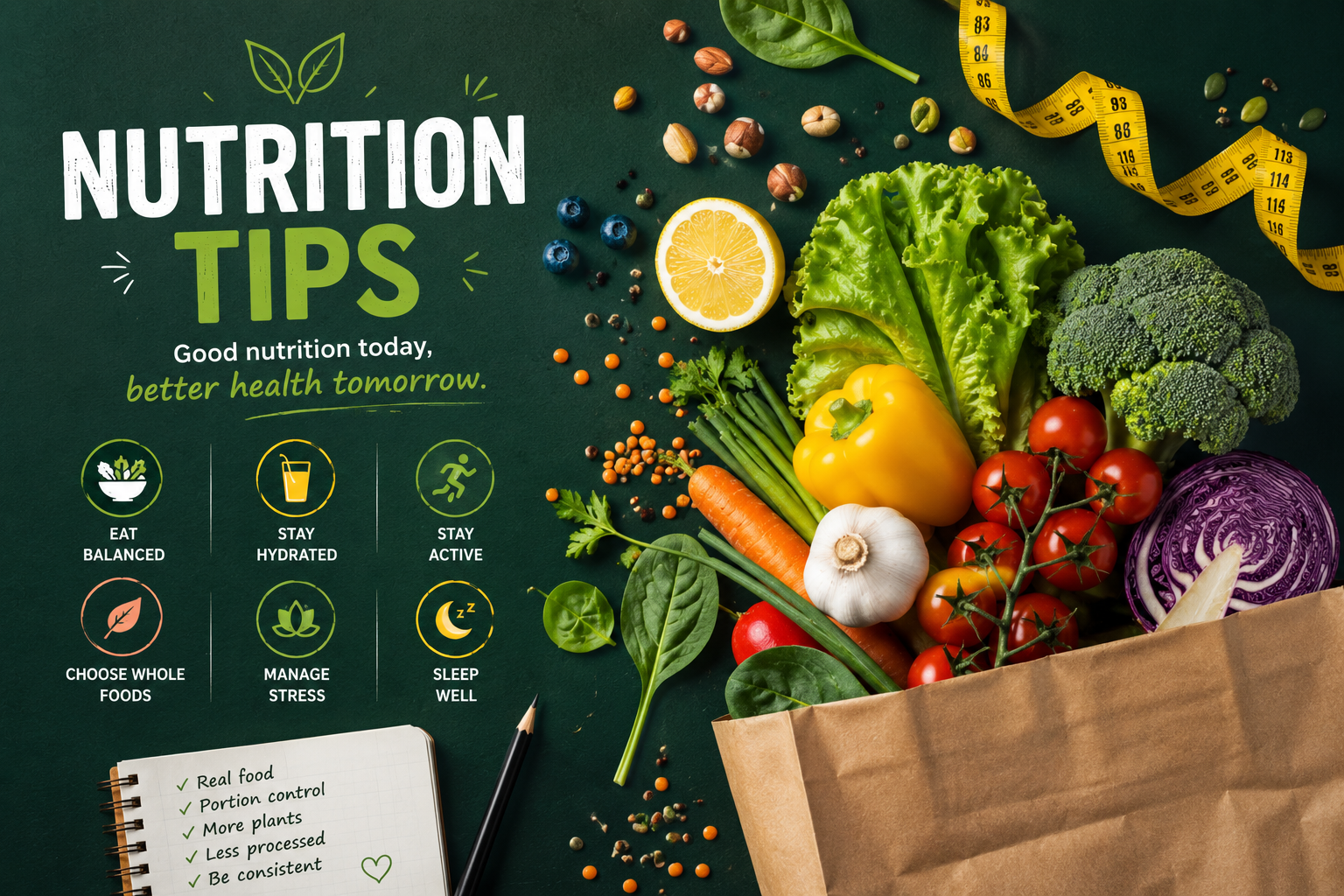
Healthy eating isn’t about following strict diets or giving up your favorite foods. Instead, it’s about making smart choices that nourish your body every day. Whether you’re trying to lose weight, improve your energy levels, strengthen your immune system, or simply live a healthier lifestyle, following the right nutrition tips can make a significant difference.
Many people believe eating healthy is expensive or complicated. In reality, small daily improvements can lead to long-term health benefits. By understanding how nutrition works, you can create sustainable habits that fit your lifestyle.
This guide covers practical, science-backed nutrition tips that anyone can follow. From choosing whole foods to staying hydrated, you’ll learn everything you need to build healthier eating habits.
Table of Contents
What Are Nutrition Tips?
Nutrition tips are practical recommendations that help people eat healthier and meet their nutritional needs. These tips focus on consuming balanced meals, maintaining portion control, drinking enough water, and choosing nutrient-rich foods over processed alternatives.
Healthy nutrition supports every function in your body, including:
- Brain health
- Heart function
- Muscle growth
- Immune support
- Digestive health
- Energy production
Why Good Nutrition Matters
Eating nutritious foods provides your body with vitamins, minerals, fiber, healthy fats, carbohydrates, and protein.
Benefits include:
- Increased energy throughout the day
- Better mental focus
- Stronger immune system
- Reduced risk of chronic diseases
- Healthy weight management
- Better digestion
- Improved skin health
- Stronger bones and muscles
A healthy diet also lowers the risk of conditions like obesity, type 2 diabetes, heart disease, and high blood pressure.
Top Nutrition Tips for Better Health
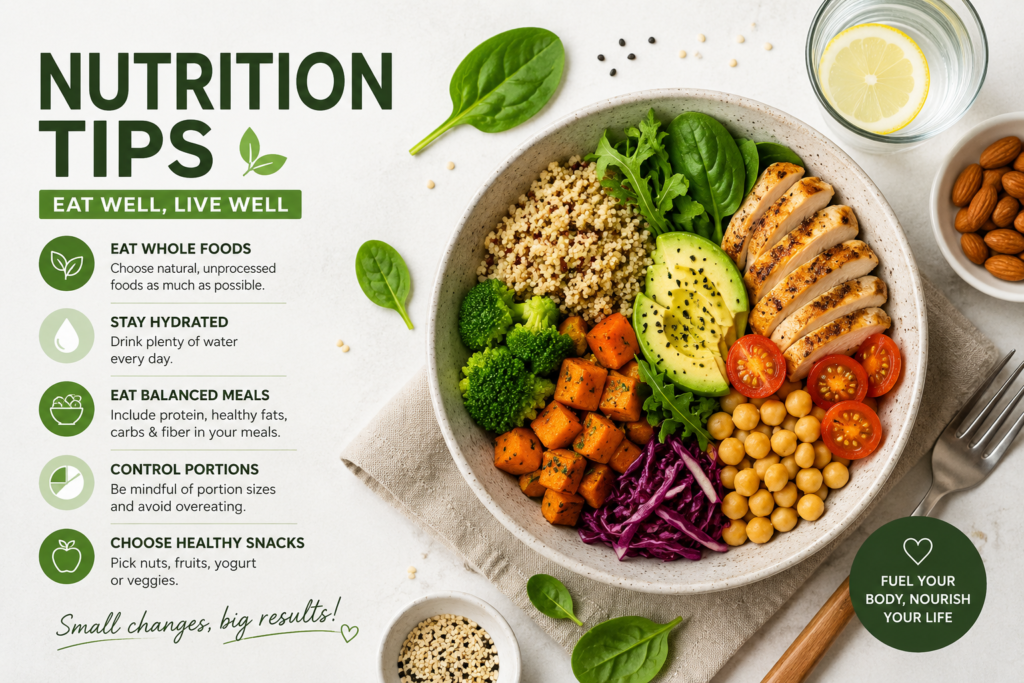
1. Eat More Whole Foods
Whole foods contain natural nutrients without unnecessary additives.
Examples include:
- Fresh fruits
- Vegetables
- Whole grains
- Nuts
- Seeds
- Beans
- Lean proteins
Try filling at least half your plate with vegetables at lunch and dinner.
2. Prioritize Protein
Protein helps repair muscles, supports metabolism, and keeps you feeling full longer.
Good protein sources include:
- Chicken
- Turkey
- Fish
- Eggs
- Greek yogurt
- Lentils
- Chickpeas
- Tofu
- Cottage cheese
Aim to include protein in every meal.
3. Drink Plenty of Water
Hydration is essential for overall health.
Benefits include:
- Better digestion
- Healthy skin
- Improved concentration
- Increased energy
- Temperature regulation
Most adults benefit from drinking enough water throughout the day, adjusting intake for activity level and climate.
4. Don’t Skip Breakfast
A nutritious breakfast helps fuel your body after an overnight fast.
Healthy breakfast ideas:
- Oatmeal with berries
- Greek yogurt with nuts
- Whole-grain toast with eggs
- Smoothie with spinach and fruit
5. Eat More Fiber
Fiber improves digestion and supports heart health.
High-fiber foods include:
- Apples
- Oats
- Brown rice
- Lentils
- Beans
- Broccoli
- Chia seeds
Adults should include a variety of fiber-rich foods daily.
6. Limit Added Sugar
Too much sugar can contribute to:
- Weight gain
- Diabetes
- Tooth decay
- Heart disease
Instead, satisfy your sweet cravings with:
- Fresh fruit
- Dark chocolate (in moderation)
- Unsweetened yogurt with berries
7. Choose Healthy Fats
Not all fats are unhealthy.
Healthy fats include:
- Avocados
- Olive oil
- Almonds
- Walnuts
- Salmon
- Flaxseeds
These foods support brain and heart health.
8. Practice Portion Control
Even healthy foods can contribute to excess calorie intake when portions are too large.
Helpful tips:
- Use smaller plates.
- Eat slowly.
- Stop when comfortably full.
- Avoid eating directly from large packages.
9. Read Food Labels
Understanding nutrition labels helps you make informed choices.
Look for:
- Low added sugar
- High fiber
- Lower sodium
- Minimal ingredients
Avoid products with long ingredient lists full of artificial additives.
10. Plan Your Meals
Meal planning reduces unhealthy food choices.
Simple meal planning ideas:
- Prepare vegetables ahead of time.
- Cook protein in batches.
- Keep healthy snacks available.
- Create a weekly shopping list.
Planning ahead saves time and money.
Foods You Should Eat More Often
Include these nutrient-rich foods regularly:
Fruits
- Apples
- Blueberries
- Bananas
- Oranges
- Strawberries
Vegetables
- Spinach
- Kale
- Broccoli
- Bell peppers
- Carrots
Whole Grains
- Brown rice
- Oats
- Quinoa
- Whole wheat bread
Healthy Proteins
- Chicken breast
- Fish
- Eggs
- Lentils
- Beans
Healthy Fats
- Olive oil
- Nuts
- Seeds
- Avocados
Foods to Limit
Reducing these foods can improve overall health:
- Sugary drinks
- Processed snacks
- Fast food
- Candy
- Refined grains
- Fried foods
- Processed meats
- Excess alcohol
You don’t need to eliminate these foods entirely—moderation is key.
Healthy Meal Planning Tips
Creating balanced meals becomes easier with a simple formula.
Fill your plate with:
- Half vegetables and fruits
- One-quarter lean protein
- One-quarter whole grains
Healthy snacks include:
- Mixed nuts
- Fresh fruit
- Hummus with vegetables
- Greek yogurt
- Cottage cheese
Preparing meals in advance can help you stay consistent with your nutrition tips and reduce reliance on convenience foods.
Common Nutrition Mistakes
Many people unknowingly make mistakes that affect their health.
Avoid these habits:
Skipping Meals
Skipping meals often leads to overeating later.
Drinking Calories
Soft drinks and sugary coffee beverages add calories without much nutrition.
Ignoring Vegetables
Vegetables provide essential vitamins and fiber.
Following Extreme Diets
Highly restrictive diets are difficult to maintain and may lead to nutrient deficiencies.
Eating Too Fast
Eating slowly allows your body to recognize fullness and may help prevent overeating.
Nutrition Tips for Weight Management
Healthy weight management is about consistency rather than perfection.
Useful strategies include:
- Eat protein with every meal.
- Increase fiber intake.
- Stay physically active.
- Drink water before meals.
- Get enough sleep.
- Manage stress effectively.
- Avoid emotional eating.
Combining balanced nutrition with regular exercise supports long-term success.
While these nutrition tips support overall health, combining them with effective weight management strategies can help you achieve and maintain a healthy body weight. Read our Weight Management Guide to learn practical tips for long-term success.
Quick Daily Nutrition Checklist
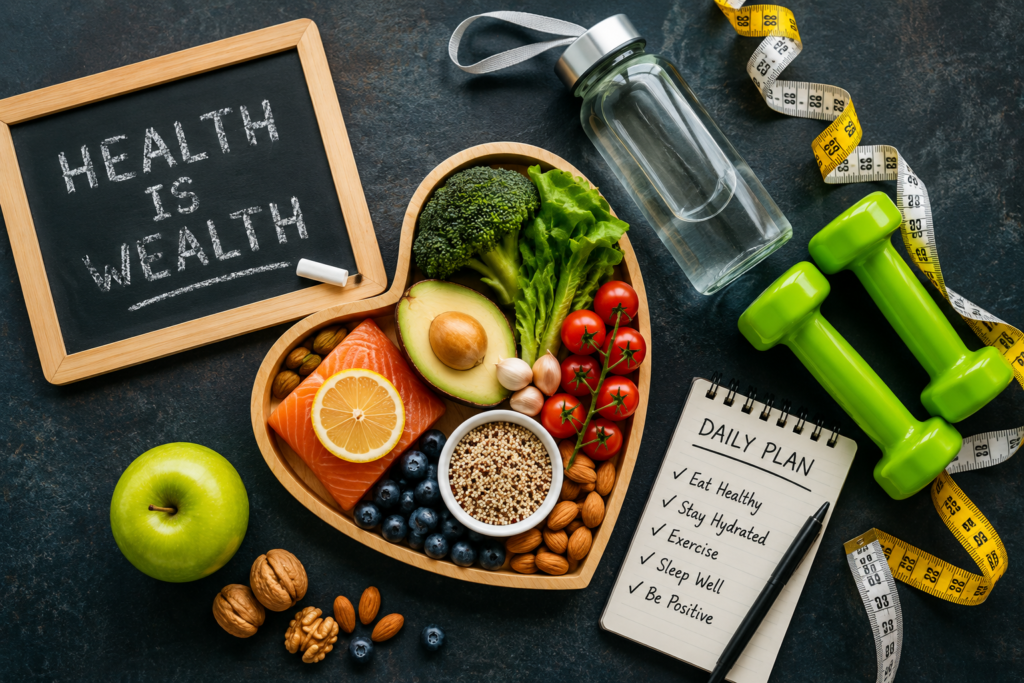
Use this simple checklist every day:
✔ Eat vegetables with lunch and dinner
✔ Include protein at every meal
✔ Drink enough water
✔ Choose whole grains
✔ Limit added sugar
✔ Eat healthy fats
✔ Read food labels
✔ Practice portion control
✔ Stay physically active
✔ Get adequate sleep
Frequently Asked Questions
1. What are the most important nutrition tips?
Focus on eating whole foods, staying hydrated, consuming enough protein, increasing fiber intake, and limiting processed foods.
2. How can I improve my nutrition every day?
Start by adding more fruits and vegetables, drinking water instead of sugary beverages, and planning balanced meals.
3. Why is protein important?
Protein supports muscle repair, keeps you full longer, and plays a vital role in many body functions.
4. How much water should I drink daily?
Hydration needs vary based on age, activity level, health status, and climate. Drinking water consistently throughout the day and paying attention to thirst is a practical approach.
5. Can healthy eating help with weight loss?
Yes. Following balanced nutrition tips, eating appropriate portions, and maintaining regular physical activity can support healthy, sustainable weight loss.
Conclusion
Following simple nutrition tips doesn’t require a perfect diet. Small, consistent improvements—such as eating more whole foods, drinking enough water, increasing protein and fiber intake, and practicing portion control—can have a lasting positive impact on your health.
Remember that healthy eating is a lifelong journey rather than a short-term challenge. Focus on building habits you can maintain over time instead of seeking quick fixes. Every nutritious choice you make today contributes to a healthier tomorrow.
Start with one or two changes this week, stay consistent, and gradually build a lifestyle that supports your goals.
Call to Action: Ready to transform your health? Begin applying these nutrition tips today, share this guide with friends and family, and explore more evidence-based nutrition resources to continue your healthy living journey.
For additional healthy eating guidance, visit the USDA MyPlate website, which provides practical recommendations for building balanced meals.