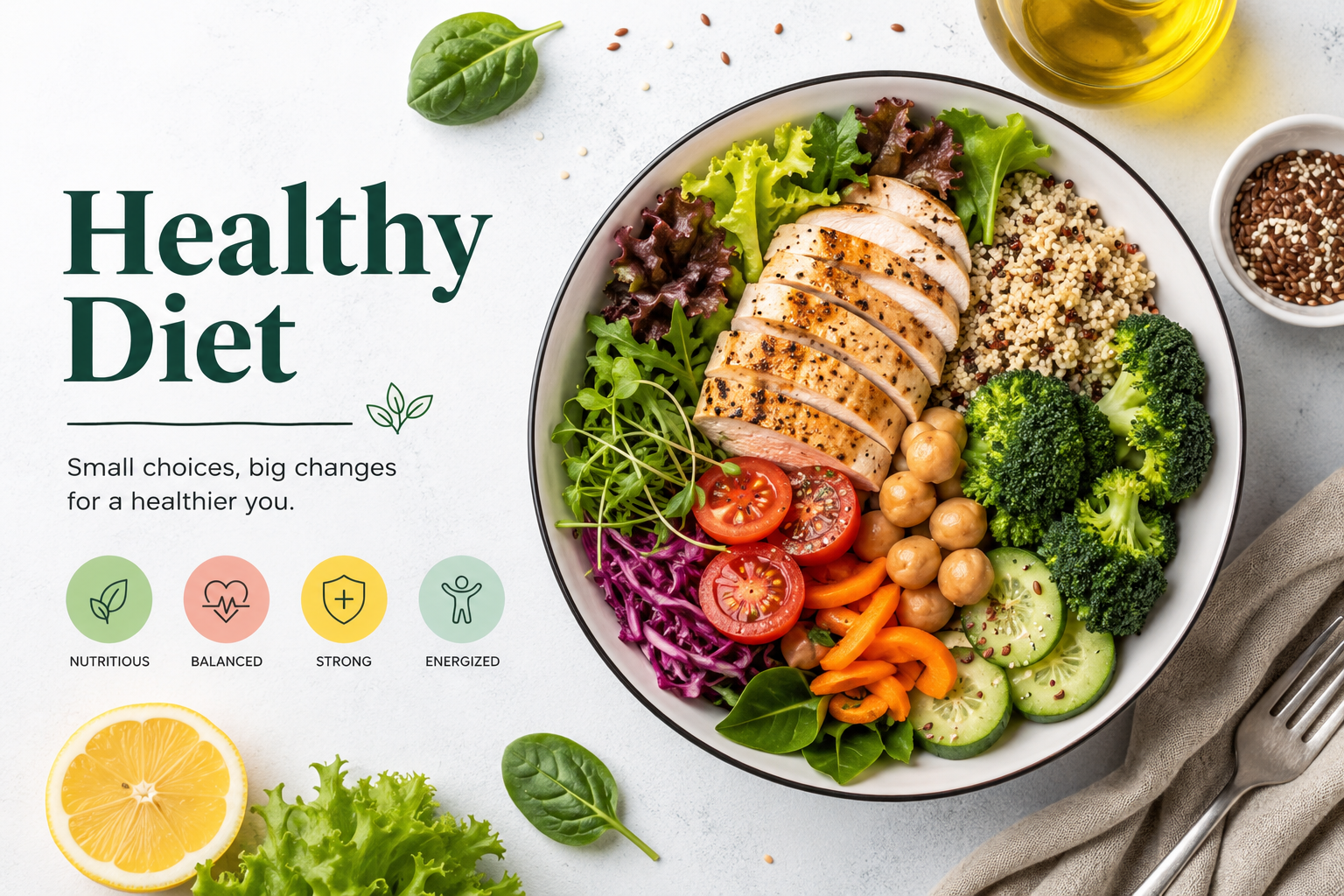
A healthy diet is one of the most powerful tools for improving your overall health, increasing your energy levels, and reducing the risk of chronic diseases. Yet, with countless diet trends and conflicting nutrition advice online, knowing what truly works can feel overwhelming.
The good news is that eating well doesn’t require expensive foods or complicated meal plans. A balanced, nutrient-rich eating pattern can help you maintain a healthy weight, strengthen your immune system, improve mental focus, and support long-term wellness.
In this guide, you’ll learn everything you need to know about building a healthy diet, including the best foods to eat, practical meal-planning tips, common mistakes to avoid, and answers to frequently asked nutrition questions.
A healthy diet is also one of the most effective ways to support healthy weight management. If you’re trying to lose or maintain weight, read our Weight Management Guide for practical tips.
Table of Contents
What Is a Healthy Diet?
A healthy diet is a way of eating that provides your body with the nutrients it needs to function properly while supporting overall physical and mental health.
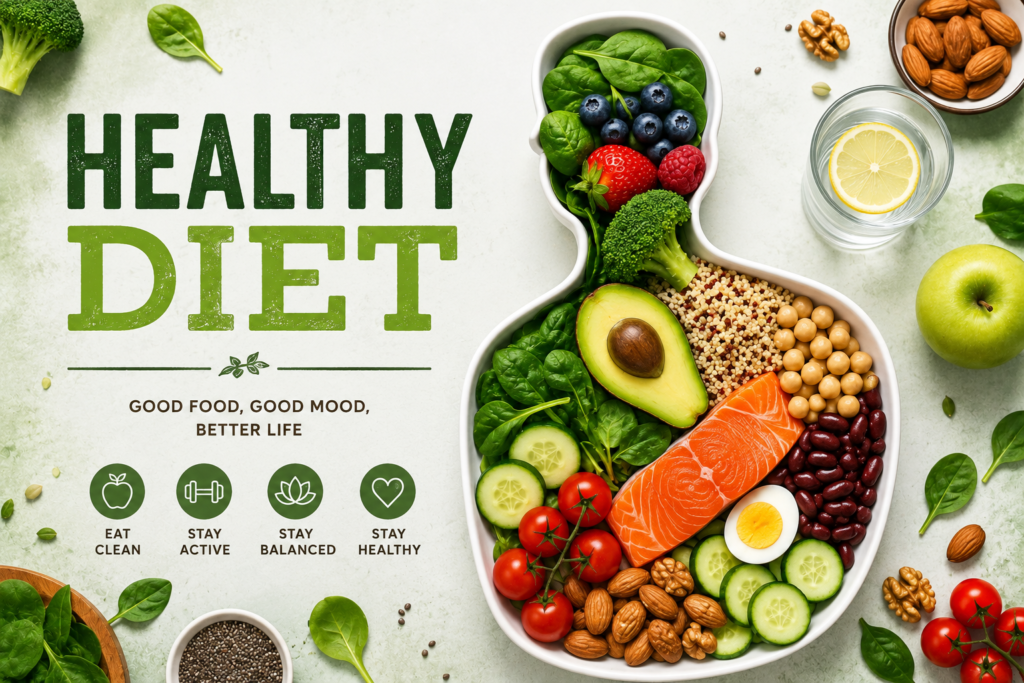
A balanced eating pattern includes:
- Fruits
- Vegetables
- Whole grains
- Lean proteins
- Healthy fats
- Low-fat dairy or dairy alternatives
- Plenty of water
Rather than focusing on restrictions, a healthy diet emphasizes balance, variety, and portion control.
According to the U.S. Department of Agriculture’s MyPlate guide, a balanced diet should include fruits, vegetables, whole grains, lean proteins, and dairy or fortified alternatives.
Why Is a Healthy Diet Important?
Eating a healthy diet offers benefits that extend far beyond weight management.
Physical Health Benefits
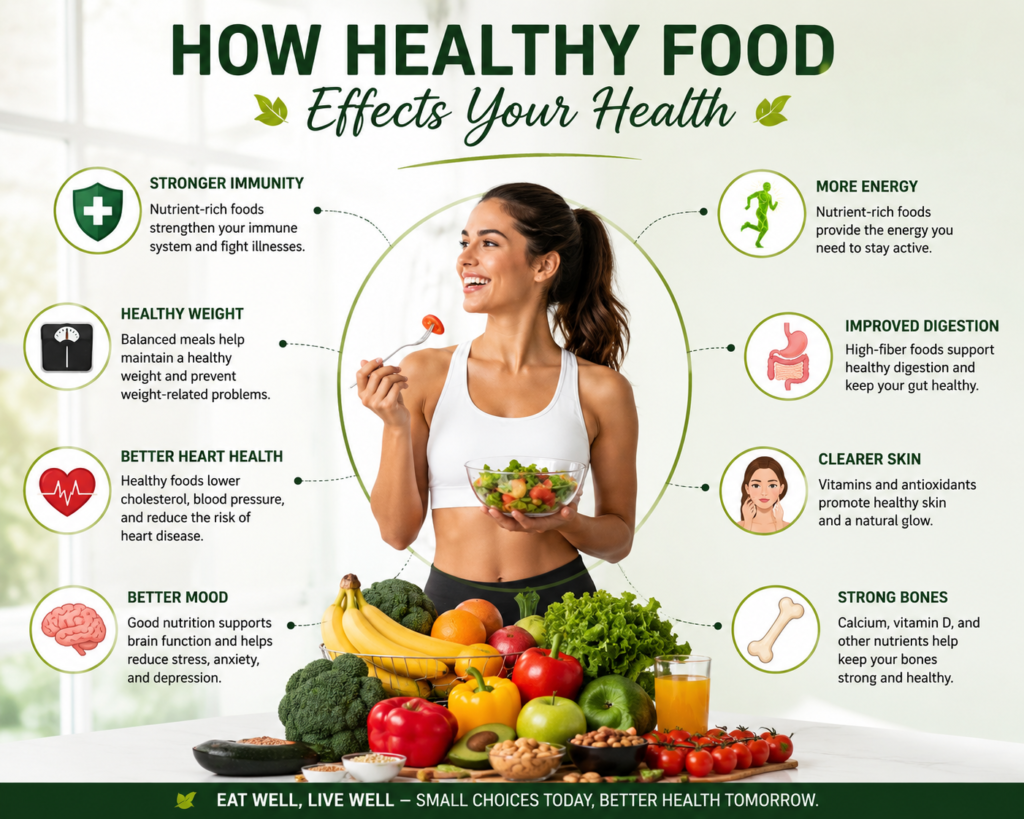
A nutritious eating pattern can help:
- Support heart health
- Improve digestion
- Maintain healthy blood pressure
- Lower cholesterol
- Reduce inflammation
- Strengthen bones
- Boost immune function
Mental Health Benefits
Research shows nutrition also supports brain health by helping improve:
- Mood
- Memory
- Concentration
- Energy levels
- Sleep quality
Essential Components of a Healthy Diet
1. Fruits and Vegetables
Aim for colorful produce every day.
Examples include:
- Apples
- Oranges
- Berries
- Bananas
- Broccoli
- Spinach
- Carrots
- Bell peppers
- Tomatoes
These foods provide:
- Vitamins
- Minerals
- Fiber
- Antioxidants
Try filling half your plate with fruits and vegetables at each meal.
2. Whole Grains
Whole grains contain more nutrients than refined grains.
Healthy choices include:
- Oatmeal
- Brown rice
- Whole wheat bread
- Quinoa
- Whole grain pasta
- Barley
Benefits include:
- Better digestion
- Stable blood sugar
- Increased fullness
- Heart health
3. Lean Protein
Protein helps repair muscles and supports immune function.
Healthy protein sources include:
- Chicken breast
- Turkey
- Fish
- Eggs
- Beans
- Lentils
- Chickpeas
- Tofu
- Greek yogurt
Try including protein with every meal.
4. Healthy Fats
Healthy fats are essential for hormone production and brain function.
Choose:
- Avocados
- Olive oil
- Nuts
- Seeds
- Salmon
- Sardines
Limit foods high in trans fats and excessive saturated fats.
5. Dairy or Dairy Alternatives
Choose:
- Low-fat milk
- Plain yogurt
- Cottage cheese
- Fortified soy milk
- Fortified almond milk
These foods provide:
- Calcium
- Vitamin D
- Protein
6. Water
Hydration is a key part of a healthy diet.
Drink water throughout the day and reduce sugary beverages whenever possible.
Best Foods to Include in a Healthy Diet
Here are some of the most nutrient-dense foods you can enjoy.
Fruits
- Blueberries
- Apples
- Oranges
- Kiwi
- Strawberries
Vegetables
- Kale
- Spinach
- Broccoli
- Brussels sprouts
- Sweet potatoes
Whole Grains
- Oats
- Brown rice
- Quinoa
- Whole wheat bread
Healthy Proteins
- Salmon
- Chicken
- Turkey
- Beans
- Lentils
- Eggs
Healthy Snacks
- Mixed nuts
- Greek yogurt
- Cottage cheese
- Fresh fruit
- Hummus with vegetables
Foods to Limit
A healthy diet doesn’t require eliminating your favorite foods, but moderation is important.
Limit:
- Sugary drinks
- Candy
- Pastries
- Processed meats
- Fried foods
- Fast food
- Highly processed snacks
- Excess sodium
- Excess added sugars
Reading food labels can help you make healthier choices.
How to Build a Healthy Plate
A simple plate method makes healthy eating easier.
Fill Your Plate Like This
Half Plate
- Vegetables
- Salad
- Fruit
Quarter Plate
- Lean protein
Quarter Plate
- Whole grains
Add:
- Healthy fat
- Water or unsweetened beverages
This balanced approach provides carbohydrates, protein, fiber, and healthy fats in appropriate portions.
Healthy Diet Tips for Everyday Life
Following a healthy diet doesn’t have to be complicated.
Plan Your Meals
Meal planning helps reduce unhealthy food choices.
Benefits include:
- Saves money
- Saves time
- Reduces food waste
- Encourages balanced meals
Read Nutrition Labels
Pay attention to:
- Calories
- Added sugars
- Sodium
- Fiber
- Protein
Eat More Fiber
Fiber supports:
- Digestion
- Heart health
- Blood sugar control
- Weight management
Good sources include:
- Fruits
- Vegetables
- Beans
- Whole grains
- Seeds
Practice Portion Control
Even healthy foods can contribute to excess calorie intake if portions become too large.
Simple tips:
- Use smaller plates
- Eat slowly
- Stop eating when comfortably full
Cook More Meals at Home
Home-cooked meals often contain:
- Less sodium
- Less sugar
- Better ingredients
- More vegetables
Stay Consistent
Healthy eating isn’t about perfection.
Small daily improvements create lasting results.
Common Nutrition Mistakes
Many people unintentionally make choices that reduce the benefits of a healthy diet.
Avoid these common mistakes:
- Skipping breakfast regularly
- Drinking too many sugary beverages
- Eating too few vegetables
- Ignoring portion sizes
- Following extreme fad diets
- Not drinking enough water
- Eating too many ultra-processed foods
- Neglecting protein intake
Consistency matters more than perfection.
Sample One-Day Healthy Diet Plan
Breakfast
- Oatmeal with blueberries
- Greek yogurt
- Water
Morning Snack
- Apple
- Handful of almonds
Lunch
- Grilled chicken breast
- Brown rice
- Mixed vegetables
Afternoon Snack
- Carrot sticks
- Hummus
Dinner
- Baked salmon
- Quinoa
- Steamed broccoli
- Side salad
Evening Snack
- Cottage cheese
- Fresh berries
Benefits of Following a Healthy Diet Long-Term
Maintaining a healthy diet over time may help:
- Maintain a healthy weight
- Lower the risk of heart disease
- Reduce the risk of type 2 diabetes
- Improve digestive health
- Support healthy aging
- Increase daily energy
- Improve mental clarity
- Promote better sleep
- Strengthen the immune system
Healthy eating is a lifelong investment in your overall well-being.
Frequently Asked Questions
1. What is the healthiest diet to follow?
The healthiest diet is one that includes a variety of whole foods, such as fruits, vegetables, whole grains, lean proteins, healthy fats, and adequate hydration while limiting highly processed foods.
2. How can I start eating a healthy diet?
Start by making small changes, such as adding more vegetables, choosing whole grains, drinking more water, and reducing sugary drinks.
3. Can a healthy diet help with weight loss?
Yes. A healthy diet that emphasizes nutrient-dense foods and appropriate portion sizes can support sustainable weight management when combined with regular physical activity.
4. How much water should I drink daily?
Hydration needs vary, but many adults benefit from drinking enough water throughout the day to stay hydrated. Factors such as activity level, climate, and overall health influence individual needs.
5. Is it okay to have treats while following a healthy diet?
Yes. Enjoying occasional treats in moderation can be part of a balanced eating pattern. The focus should remain on consistent, healthy choices most of the time.
Conclusion
A healthy diet is not about strict rules or eliminating every favorite food. Instead, it focuses on building sustainable habits that nourish your body and support long-term health.
By choosing more whole foods, eating balanced meals, staying hydrated, and practicing portion control, you can improve your energy, maintain a healthy weight, and reduce the risk of chronic diseases. Remember that lasting success comes from small, consistent changes rather than quick fixes.
Ready to take the next step? Start by making one healthy change today—whether it’s adding an extra serving of vegetables, swapping sugary drinks for water, or planning your meals for the week. Small actions can lead to lifelong health benefits.